
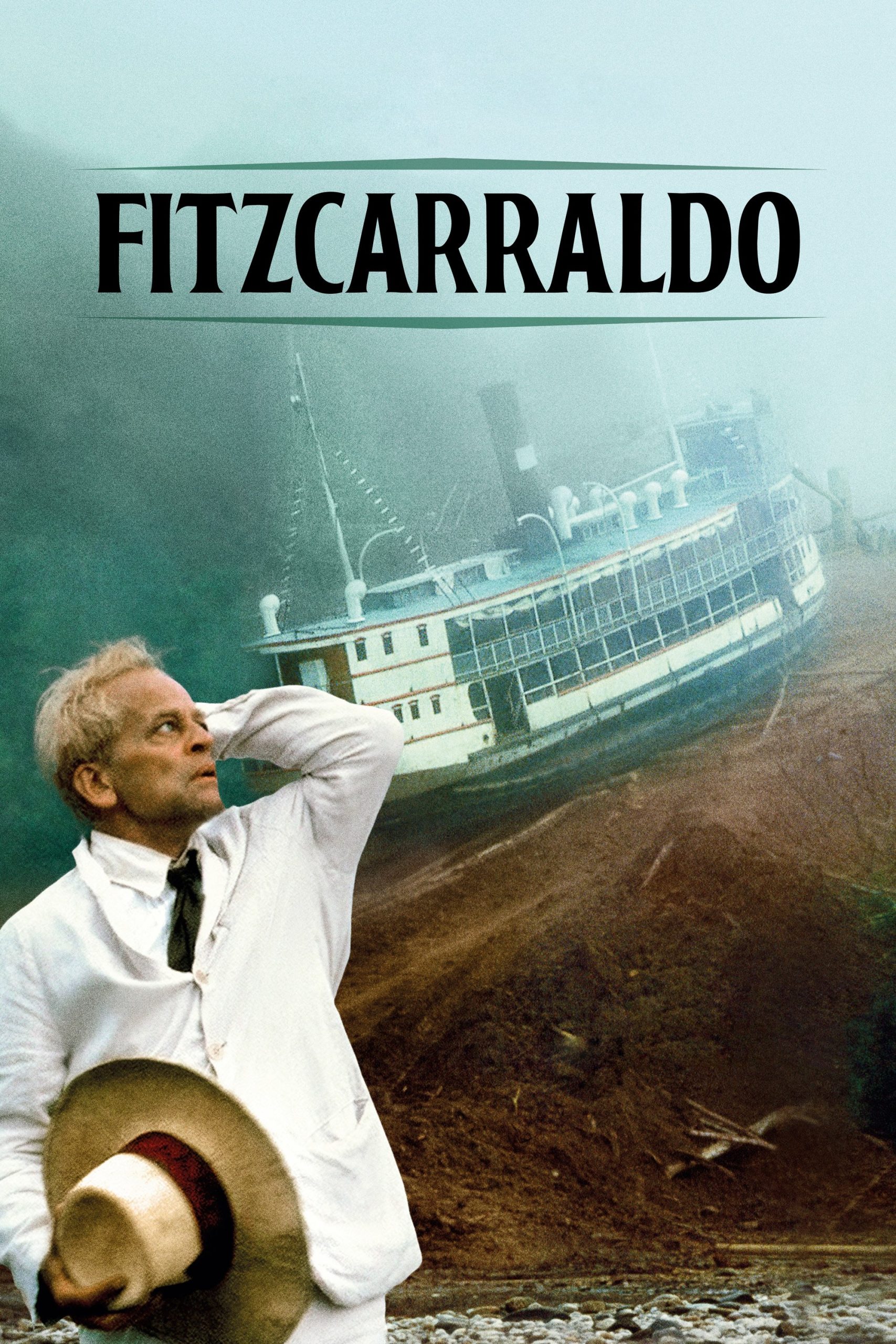
What the Film Is About
From the minute I first watched Fitzcarraldo, I felt thrust into the thrall of a fever dream built equally from obsession and hope. The film, for me, is less about the literal undertaking of hauling a steamboat over a mountain than it is about letting a singular vision—however impossible—take complete hold of a person. Klaus Kinski’s Brian Sweeney “Fitzcarraldo” Fitzgerald is consumed by the fantastic, almost absurd, desire to bring grand opera to the deepest wilds of the Amazon. That quest unfurls as an all-consuming emotional journey, veering between ecstatic ambition and stubborn futility. At its heart, I believe, the film confronts the limits and dangers of human willpower in the face of nature, society, and the inscrutable forces that shape fate itself.
I often think about how Fitzcarraldo’s central conflict is tangled not only in external obstacles—geography, financial desperation, and cultural divides—but also in the emotional tumult within its lead character. The narrative never feels like a standard triumph-over-adversity tale. Instead, I found its direction to be relentlessly questioning: what does it cost to drag your dreams across impossible terrain, and what kind of reckoning is left at the end of that journey? The emotional arc recoils between reverence and folly, hope and heartbreak, offering no easy answers and instead challenging me to sit with the film’s awe for both creation and destruction.
Core Themes
What strikes me the most about Fitzcarraldo is its twin meditation on ambition and madness. Herzog—through Fitzcarraldo’s mania—asks whether it’s possible, or even ethical, for individuals to bend reality to their will. The film’s obsession with visionaries walks the knife-edge between inspiration and delusion. As I watched, I saw Fitzcarraldo’s opera dream morph from an innocent passion into something like an imperial enterprise, exposing the seductive, often predatory nature of unchecked ambition.
I’m also drawn to the film’s complicated relationship with nature. The Amazon is never just a backdrop here; it is irrefutable and omnipotent, somehow both cruel and indifferent. The narrative pits Western ingenuity and aspiration against the humbling power of the natural world. For me, this creates a dialogue about humanity’s arrogance: our willingness to conquer, exploit, or “civilize” landscapes and peoples we do not fully understand. When the film was released in 1982, debates about environmental degradation and the legacy of colonialism were intensifying globally—a context that makes Fitzcarraldo’s determination resonate with both critique and melancholia. Yet these themes still thrum today, as questions of exploitation and sustainability have only deepened.
There’s also a haunting subtext of cultural collision—of the arrogance and naiveté inherent in attempting to “bring art” to others as if they lack their own rich traditions. When Fitzcarraldo brings Caruso on vinyl to the jungle, I’m left to ponder not only beauty, but also the blind spots of sincere intentions. The film dances on the razor’s edge between creative yearning and cultural arrogance, making me continuously reevaluate my relationship with art, power, and otherness.
Symbolism & Motifs
The recurring images and objects in Fitzcarraldo work on me like half-remembered dreams, their meanings elusive yet persistent. Chief among them, of course, is the steamship itself—the Molly Aida. Hauling that massive vessel over a mountain never feels merely literal; to me, it becomes a blunt metaphor for the weight of human longing. The endless rope lines, the creak and groan of stressed wood, the chorus of struggle—all suggest the burden of impossible aspirations, the folly of dragging one’s desires past the point of reason. Whenever I recall the ship perched precariously amidst the jungle, I see not just machinery, but the artist’s burden—how passion weights down the soul, and maybe how beauty finds its steepest price in obsession.
Opera, as motif, is everywhere, too—not just as Fitzcarraldo’s passion, but as a sort of spiritual soundtrack to the film’s undertakings. There’s a deep irony in the West’s highest art being channeled into the raw, unyielding wilderness. When Caruso’s voice floats from the gramophone into the trees, I feel the collision: civilization versus nature, art versus chaos, the ephemeral beauty of music against the eternal silence of the jungle. This juxtaposition makes the film’s spiritual backbone clear to me—art as salvation, but also as intrusion.
I also notice how water is a restless, shape-shifting motif throughout the film. Rivers both invite and threaten. The vast, unknowable Amazon stands as Fitzcarraldo’s path to glory and his possible undoing. Water here is not just a setting but an antagonist—flowing, shifting, ultimately indomitable. To me, it embodies the futility of mastering nature and the persistence of chaos beneath the thin veneer of order that Fitzcarraldo hopes to impose.
Key Scenes
Key Scene 1
The image seared into my memory is the moment Fitzcarraldo, freshly arrived in the jungle, first unveils his big plan to his skeptical crew and partners. What electrifies this scene is not just the audacity of the proposal but the way the faces around him register confusion, awe, and impending doom. For me, this juncture is where the film reveals its central preoccupation: the simultaneous absurdity and heroism of dreaming beyond one’s means. As Fitzcarraldo describes hauling the steamboat up and over a mountain, reality and fantasy are momentarily indistinguishable, and I feel the exhilarating pull of impossibility made tangible. The emotional force of this moment is matched by its symbolic resonance. Here, the film dares me to consider whether all great endeavors require a touch of insanity—and at what cost that inspiration may come.
Key Scene 2
Another critical moment for me unfolds amid the Herculean task itself, as Fitzcarraldo and his indigenous allies begin to drag the Molly Aida up the muddy incline. The tableau borders on the biblical—a procession of straining bodies, tangled ropes, and shifting mud. This is where the film’s exploration of exploitation and complicity comes into sharp focus for me. There’s no triumph without suffering, no grand plan without consequence. I catch myself asking about the nature of leadership, faith, and manipulation—how much of this endeavor is built on genuine cooperation and how much on misguided charismatic authority? The scene forces a confrontation with the ambiguities of heroism, making me reflect on the price others must pay when one person pursues greatness at any cost. The tension between visionary determination and delusional exploitation comes fully alive here, haunting me long after the screen goes dark.
Key Scene 3
The film’s closing act—once the ship has ascended, descended, and the mission essentially collapses—lands with a peculiar sense of both defeat and transcendence. When Fitzcarraldo orchestrates a makeshift opera performance aboard his barely seaworthy steamboat, I see not a man crushed by failure, but one momentarily redeemed by his capacity for joy. It’s a bittersweet coda: the dream is realized, if only for a fleeting instant and under deeply compromised terms. This final sequence reveals, for me, the ultimate ambiguity of Fitzcarraldo’s journey—triumph and folly forever entwined. The film refuses to romanticize or wholly condemn its protagonist, and instead leaves me marveling at the strange, beautiful stubbornness of the human spirit. It’s a final statement on the limits of ambition and the yearning for transcendence that lingers within all of us, regardless of how the world answers our call.
Common Interpretations
Whenever I talk with cinephiles or revisit critical essays on Fitzcarraldo, I’m struck by how many readings the film supports. Some see it primarily as a parable about artistic obsession—a mirror of Werner Herzog’s own quixotic urges as a filmmaker. That reading resonates deeply with me, especially given the notorious circumstances of the film’s production, where Herzog famously had his cast and crew physically move a real steamboat over a real mountain. In this interpretation, Fitzcarraldo is both a celebration and a lament for the artist: a warning that visionaries may inspire, but also destabilize and destroy.
Another widely discussed approach frames the film as an allegory of colonialism. Fitzcarraldo’s outsider status, his attempts to remake the world according to Western ideals, and his use (and, some would say, exploitation) of indigenous labor all echo the broader historical patterns of conquest and paternalism. Here, the Amazon’s dangers and mysteries become stand-ins for the limits of cultural arrogance. I find this reading especially convincing when I consider how the film underscores the limits of understanding across cultural divides—and the sometimes tragic outcomes of good intentions entwined with blind spots.
A third interpretation, often combined with the above, suggests Fitzcarraldo is also about the futility and necessity of dreamers. The film neither mocks Fitzcarraldo as a mere fool nor elevates him to hero status—it dwells in a rare, unsettling gray area. Some audiences, like myself, end up with deep ambivalence: moved by the grandeur of the undertaking, yet aware of the suffering it causes and the limited, perhaps hollow, scope of any ultimate achievement. I find the film is less about winning or losing than about the value in striving, no matter the outcome.
Films with Similar Themes
- Aguirre, the Wrath of God – Another Herzog-Kinski collaboration, this film delves into obsession and megalomania, using South American landscapes to explore the ruinous side of visionary leaders. Both films grapple with the thin line between genius and madness and the price of trying to master the uncontrollable.
- Apocalypse Now – Coppola’s descent into the heart of darkness shares Fitzcarraldo’s preoccupation with ambition, colonial folly, and the corrosive effects of unchecked will. The jungle serves as an existential testing ground for both narratives.
- There Will Be Blood – Daniel Day-Lewis’s oilman is another singular obsessive, whose pursuit of greatness and legacy leaves destruction in its wake. Both Fitzcarraldo and Daniel Plainview are haunted by the cost of ambition and the limits of human will.
- The New World – Terrence Malick’s meditation on cultural encounter and the clash between utopian dreams and the implacable realities of nature resonates closely with Fitzcarraldo’s aesthetic and philosophical concerns.
For me, Fitzcarraldo ultimately speaks to the irrepressible—sometimes reckless—side of human nature that insists on shaping the world in the image of our yearning. It questions both the ecstasy and the arrogance of shaping dreams against impossible odds, never letting me settle into comfort with its characters or implications. The film is as ambiguous as the jungle itself: lush, dangerous, and full of ghosts—inviting me not just to witness, but to question what I believe about progress, beauty, and the unavoidable, beautiful madness that lies at the heart of creation.
After learning the historical background, you may also want to explore how this film was received and remembered.